Soft Floors, Sagging Floors, and Structural Warning Signs You Shouldn't Ignore
Soft spot in floor? Sagging? Sloped countertops, doors that won't latch? How to read structural warning signs in Vancouver WA and Portland homes.

“Is this serious?” is the question behind almost every structural call we take in Vancouver WA and the Portland metro. The floor feels soft near the dishwasher. The bedroom door stopped latching. There is a crack above the hallway doorway that was not there last year.
Any one of those, alone, might be nothing. The same three together are a message from your framing. This guide explains what each symptom means, which combinations matter, and gives you a simple decision tree: monitor it, get it inspected, or call now.
Soft Spot, Sag, or Squeak: Three Different Problems
These three get lumped together, but they have different causes and very different urgency.
A squeak is movement between materials: a deck board against a nail, subfloor against a joist, hardwood against subfloor. Squeaks are annoying and almost always cosmetic. A squeak that has been the same for ten years is character. A new squeak in an area that also feels different underfoot is worth more attention.
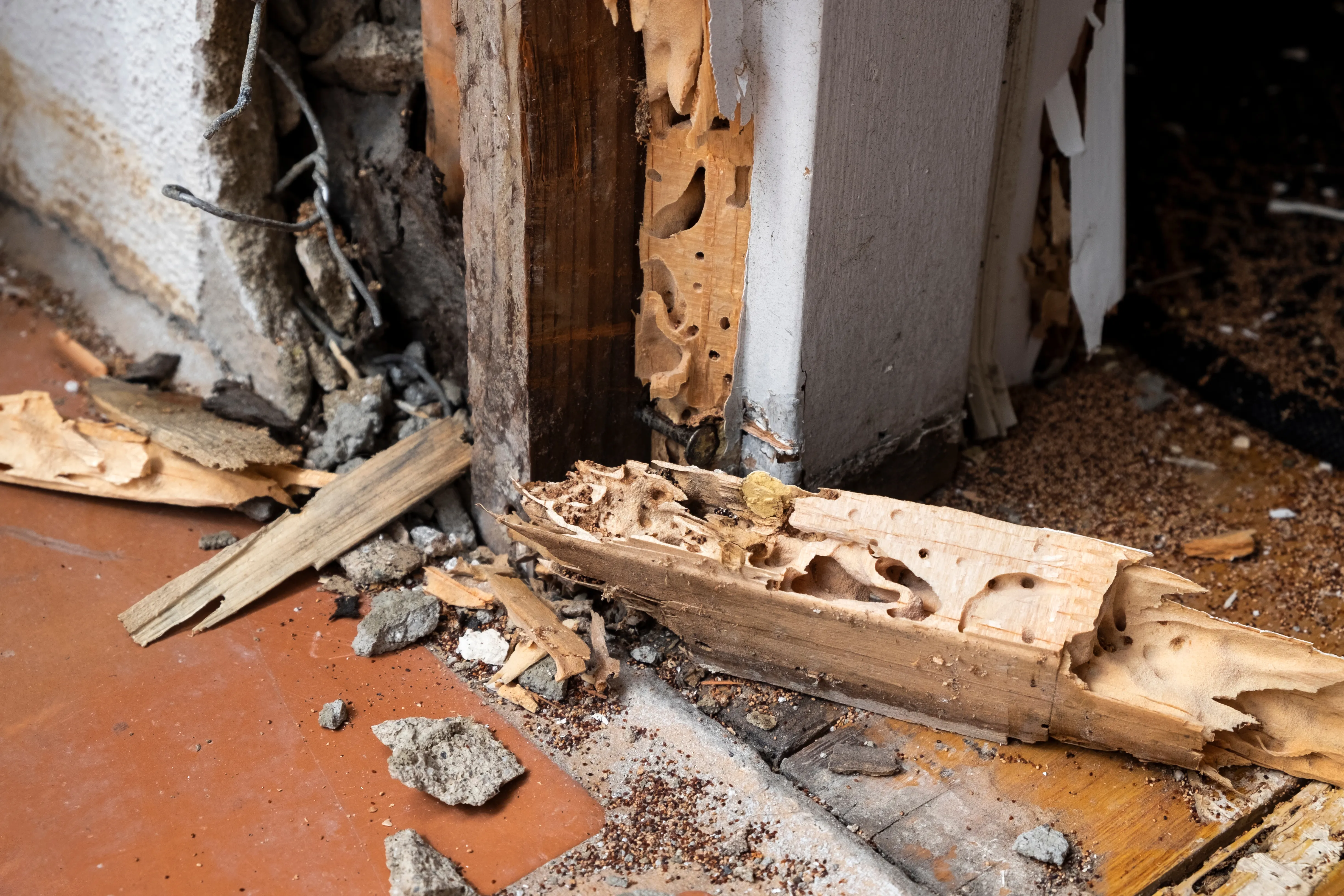
A soft spot is localized. One section of floor, often no bigger than a dinner plate or a doormat, gives slightly under your weight while the floor around it feels solid. A soft spot means the material directly under your foot has lost integrity: subfloor delaminating from moisture, or rot in a small area. Soft spots are almost always water stories, which is why they cluster in bathrooms, kitchens, and laundry rooms. The spot is small, but the cause is rarely confined to what you can feel.
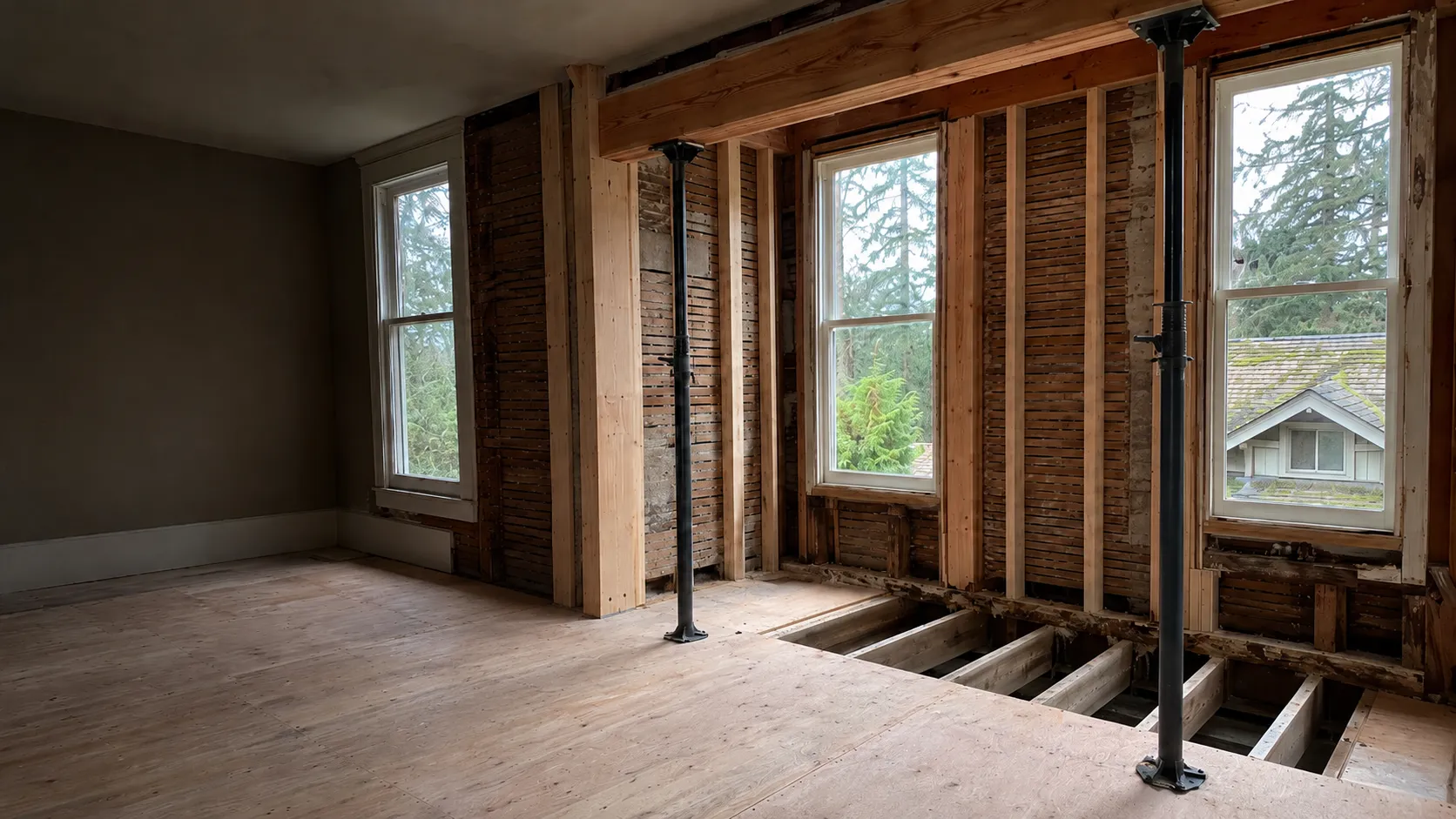
A sag is structural geometry. The whole floor plane dips toward a low point, marbles roll, furniture needs shimming, and you can see the dip in a long sightline or measure it with a four-foot level. A sag means the framing itself, the joists, a beam, or the posts under them, is deflecting. Sags are about the skeleton of the house, not the skin.
The quick test: a soft spot moves under your foot but the floor around it is flat and firm. A sag does not flex underfoot at any single point, but the surface itself is no longer level.
We covered sagging floors in depth, including repair methods and 2026 costs, in our sagging floor repair guide. This article is about the bigger picture: reading all the warning signs together.
The Warning Signs Beyond the Floor
Framing problems do not stay in the floor. When the structure of a house moves, the symptoms show up in the parts of the house that were built square and straight. These are the ones homeowners dismiss one at a time.
Doors that will not latch
A door is a precision instrument compared to the rest of the house: a quarter inch of frame movement is the difference between latching and not. One sticky door after a wet week is humidity. A door that progressively stopped latching over months, especially when nothing about the door or strike plate changed, means the opening itself has racked out of square because the framing around it moved.
Pay particular attention when several doors along the same wall or in the same corner of the house change behavior together. That pattern points to settlement or framing deflection in that part of the structure.
Drywall cracks above doorways
Diagonal cracks running up and out from the top corners of doors and windows are stress relief. The opening is the weakest point in a wall, so when the wall racks, the corner cracks first. Hairline cracks that appeared once, were patched, and stayed gone are old news. Cracks that reopen after patching, grow, or appear in matching pairs on both sides of an opening indicate ongoing movement.
Sloped countertops
Set a marble or a round pencil on the kitchen counter. Counters are installed level, so a counter that now slopes is reporting that the floor under the cabinets has dropped on one side. Homeowners rarely notice gradual counter slope until oil pools at one end of a frying pan or the marble test surprises them. A sloped counter on an exterior wall side of the kitchen often pairs with crawl space framing problems below.
Gaps at baseboards and crown molding
When floors drop or walls move, trim separates. Look for a gap between the baseboard and the floor that you can slide a coin into at one end of a wall but not the other, or crown molding pulling away from the ceiling at a corner. New, growing gaps matter; stable old ones usually do not.
Windows that fight back
Windows that have become hard to open or close, or that suddenly drift open or closed on their own, are the same story as doors: the opening has gone out of square.
Bouncy or trampoline-like floors
A floor that flexes noticeably when someone walks across the room, rattling dishes in the cabinet, suggests joists that are undersized, overspanned, or weakened. Bounce is different from sag: the floor may still be level, but it has too much give. Bounce that worsens over time, rather than having always been there, deserves an inspection.
What Combinations Usually Mean
Single symptoms have innocent explanations. Combinations rarely do. Patterns we see repeatedly in Clark County and Portland metro homes:
Soft spot + musty smell + bathroom or kitchen nearby. Water has been getting into the subfloor, usually for a year or more. The soft spot is the center of a larger wet area. This is a rot and moisture repair, and it grows every month it waits.
Sag + doors not latching on the floor above. The framing deflection is large enough to rack the wall openings above it. Usually a beam, post, or multiple-joist problem in the crawl space rather than a single weak joist.
Sag + sloped counter + baseboard gaps, all on the same side of the house. Differential settlement or a failing beam line along that side. This pattern is worth a prompt professional look, because it indicates the support system, not just one component.
Cracks above several doorways + sticking windows + exterior stair-step cracks in foundation or brick. This combination points toward foundation movement rather than floor framing. See our guide to signs of structural damage for the foundation-side symptoms in detail.
New bounce + visible moisture in the crawl space. Joists losing stiffness from sustained dampness. In our climate this is one of the most common early structural findings, and one of the most fixable.
The Decision Tree: Monitor, Inspect, or Call Now
Here is the triage we would apply in your house.
Monitor (re-check monthly, photograph and date):
- A squeak, old or new, with no other symptoms
- One sticky door during the wet season that frees up in summer
- Hairline drywall cracks that have not changed since you noticed them
- An old soft spot or dip that multiple owners have known about and that measures the same year after year
Monitoring means actually measuring: pencil-mark crack ends with dates, note how far a coin slides under a baseboard, lay a level across the dip and record the gap. Memory is a terrible instrument.
Get an inspection scheduled (weeks, not months):
- Any new soft spot, anywhere, even small
- A measurable sag: more than 3/8 inch of dip over a four-foot level
- A door or window that changed behavior and stayed changed through a dry season
- Drywall cracks that reopen after patching or visibly grow between your dated photos
- Counter slope you can verify with a level or marble
- Bounce that is new or worsening
- Any single symptom paired with known crawl space moisture
Call now:
- Two or more symptoms appearing together in the same area of the house
- Anything that changed noticeably within weeks rather than years
- A floor that feels like it moved or dropped after a specific event: a leak, a flood, a very wet winter
- Visible rot, fungal growth, or standing water in the crawl space along with any floor symptom
- Cracking or popping sounds from the floor structure under normal use
Fast-moving symptoms are the structural red flag. Houses settle slowly; failures accelerate.
How to Measure What You’re Seeing
Almost every tool you need for first-pass structural triage is already in your house. Spending twenty minutes measuring turns “I think it’s worse” into data, and it makes any inspection you schedule dramatically more useful.
The four-foot level. Lay it across the suspect floor in several directions and measure the gap under it with a tape. Under 1/4 inch over four feet is ordinary for an older home. Past 3/8 inch is worth professional eyes. Write the number and the date on a piece of painter’s tape and leave it on the baseboard nearby.
The marble. A marble or golf ball on a hard floor shows you slope direction instantly. Roll it from several starting points; consistent travel toward the same low point maps the dip.
The pencil and the crack. For any drywall crack you are watching, draw a short pencil line across each end of the crack and date it. If the crack grows past the line, you have proof of active movement, which is the single most important fact an inspector wants to know.
The door test. For a door that will not latch, look at the gap around the door slab. A wedge-shaped gap, tight at one corner, wide at the other, shows the frame has racked, and which way.
The phone. Photograph everything with the date stamp on. Re-photograph monthly from the same spot. Structural questions are questions about change over time, and homeowners who bring dated photos and measurements get answers in one visit instead of two.
None of this replaces an inspection when symptoms warrant one. It does something almost as valuable: it establishes the baseline that separates a stable quirk from an active problem.
What an Inspection Actually Looks Like
A real structural assessment of floor symptoms is mostly done from below. At NW Reliable Home Services, ours runs like this: we map the dips and soft areas from above with a level and our feet, then get into the crawl space with a flashlight, a moisture meter, and a probe. We check joists, beams, and posts under the symptomatic areas, probe for rot, measure moisture, and look at the pads and connections. Then you get a written explanation of what is causing what you are feeling upstairs, and a fixed price if repair is warranted.
Sometimes the answer is genuinely reassuring: an old, stable, dry sag that needs nothing but monitoring. We tell people that regularly. The point of an inspection is not to find work; it is to replace guessing with measurements.
Most floor symptom inspections take under an hour, and ours are free across Vancouver, Camas, Battle Ground, Ridgefield, and the whole Portland metro.
Why This Matters More in the Pacific Northwest
The same climate math from every structural article we write applies here: PNW homes sit over damp crawl spaces for eight months a year, and moisture is the root cause behind most weakened floor framing in this region. Add the older housing stock in Vancouver and inner Portland, built with the joist sizes and spans of their era, and you get floors with thin margins that moisture erodes year by year. A symptom that might mean nothing in Phoenix deserves a look in Clark County.
Frequently Asked Questions
Why does my floor have a soft spot?
Almost always moisture: subfloor that has delaminated or begun to rot because of a plumbing drip, a failed seal at a tub or toilet, or chronic crawl space dampness below. The soft area you feel is typically the center of a larger affected area.
Are uneven floors in a house always serious?
No. Many older Portland and Vancouver homes have stable, decades-old slopes that are quirks, not emergencies. The distinction is movement: a slope that measures the same year after year is history; one that is growing is an active problem.
Is a bouncy floor a structural problem?
Sometimes. Bounce means the joists deflect under live load, which can be original undersizing or new weakening. Bounce that has always been there is usually a stiffness shortfall; bounce that is getting worse suggests deterioration and warrants an inspection.
How do I know if floor problems are foundation problems?
Floor framing problems usually concentrate symptoms in floors, doors, and trim near the affected framing. Foundation problems add exterior signs: cracks in the foundation wall, stair-step cracks in brick or block, and symptoms aligned along one whole side of the house. An inspection distinguishes them quickly.
What does it cost to fix a soft or sagging floor?
Localized subfloor and rot repairs often run several hundred to a few thousand dollars. Framing-level repairs, sistering, beam and post work, run more; our sagging floor repair guide breaks down 2026 pricing in detail.
If your floor is telling you something and you are not sure how to read it, call NW Reliable Home Services at (360) 713-8022 for a free assessment anywhere in Vancouver WA, Clark County, or the Portland metro. We will measure, look underneath, and tell you plainly whether it is a monitor, an inspect, or a fix.